
Practical hydration strategies begin with consistent, scheduled water intake rather than relying on thirst cues. Our mission here at 7 Point Nutrition is to inspire healthy lifestyles through our Seven Point coaching program. Clients benefit from drinking regularly during heat and exercise, monitoring urine color, and recognizing that thirst naturally declines with age.
What is a hydration guide?
A hydration guide is a structured framework for daily fluid intake that extends beyond counting glasses of water. The human body is 50-65% water, making adequate hydration critical for normal physiological function. Without a systematic approach, individuals risk chronic dehydration that undermines energy, cognition, and long-term health.
7 Point Nutrition incorporates hydration as one of seven core points in its holistic coaching methodology. The company evaluates fluid needs through a functional lens, recognizing that hydration supports brain function, circulation, and sleep quality. This integrated perspective treats water intake as inseparable from mindset, nutrition, and exercise.
How does a hydration guide differ from generic water advice?
Generic advice often repeats the “eight glasses a day” rule without context. A proper hydration guide accounts for body weight, activity level, climate, and dietary factors. It provides actionable protocols rather than vague suggestions.
What role does hydration play in a holistic health plan?
Hydration regulates body temperature, transports nutrients, and removes waste products. 7 Point Nutrition’s 7 Points of Health framework positions proper fluid balance as foundational to cardiovascular health and digestive function. Dehydration compromises every other wellness pillar, from sleep quality to exercise recovery.
The company’s coaches assess individual hydration patterns during one-on-one programming. Clients learn to recognize early dehydration signs such as fatigue, headaches, and dark urine before performance declines. This proactive monitoring transforms hydration from an afterthought into a deliberate daily practice.
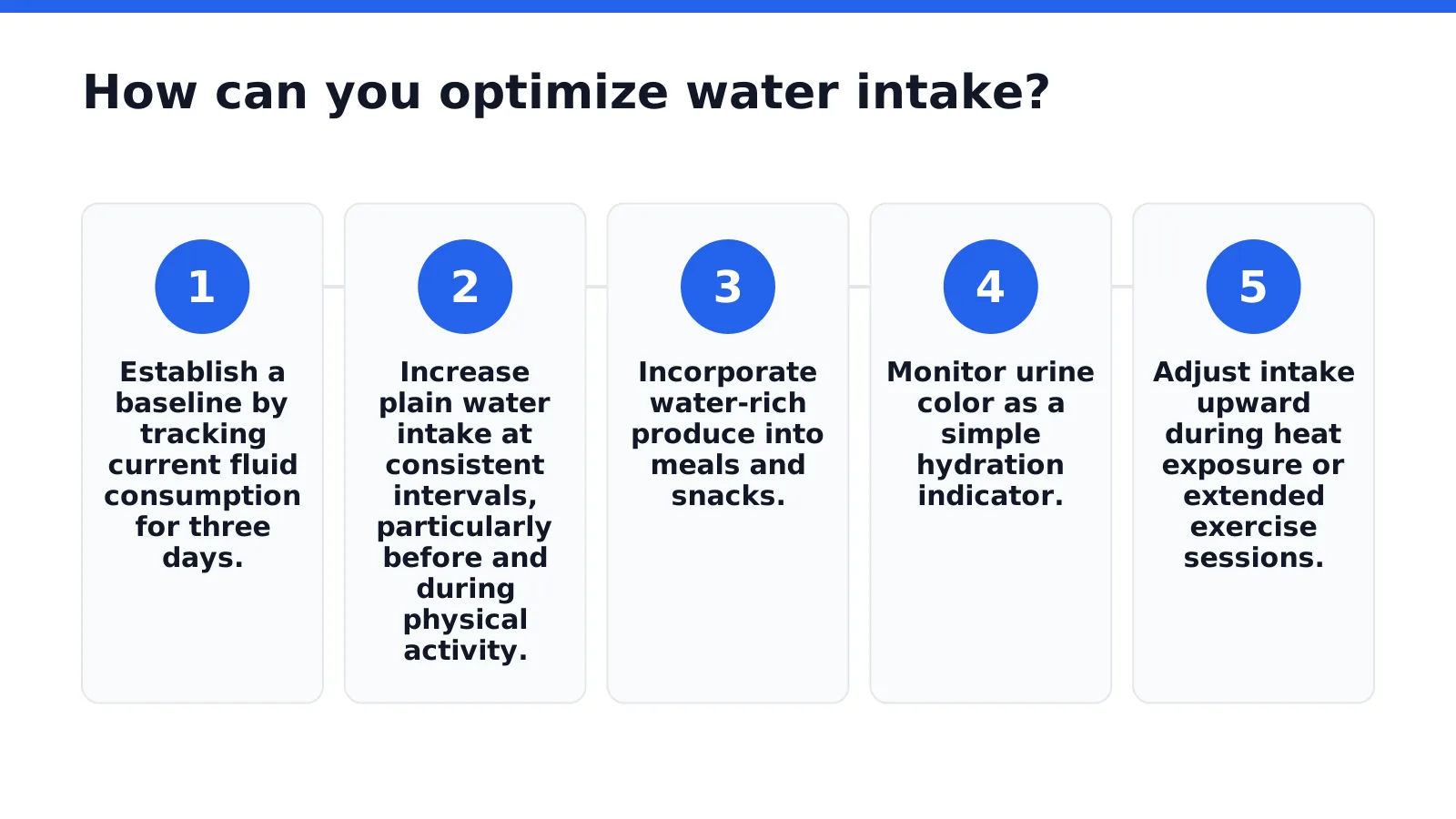
How can you optimize water intake?
Optimizing water intake requires a structured, individualized approach rather than a universal prescription. Fluid needs vary from person to person, depending on activity level, climate, and individual physiology. A one-size-fits-all hydration rule fails most people.
What is the most effective daily hydration strategy?
Drinking regularly throughout the day, especially during heat and exercise, maintains consistent hydration. Waiting until thirst appears means the body has already begun experiencing fluid deficit. Scheduled intake prevents this decline.
What foods support daily hydration?
Hydrating whole foods contribute significantly to total water intake. Fruits and vegetables with high water content supplement beverages effectively. These foods deliver fluid alongside fiber and micronutrients.
A practical optimization sequence follows:
Establish a baseline by tracking current fluid consumption for three days.
Increase plain water intake at consistent intervals, particularly before and during physical activity.
Incorporate water-rich produce into meals and snacks.
Monitor urine color as a simple hydration indicator.
Adjust intake upward during heat exposure or extended exercise sessions.
Electrolyte balance is a key component of effective hydration, especially for active individuals. Fluid-replacement beverages with optimal composition support performance during prolonged exertion. 7 Point Nutrition’s coaching programs emphasize flexible, realistic lifestyle changes rather than rigid rules. Clients receive data-driven guidance tailored to their specific physiology and daily demands.

What are common dehydration signs?
Dehydration signs appear when the body loses more fluid than it takes in. This imbalance results from sweating, vomiting, diarrhea, fever, certain medications, or simply not drinking enough fluids. Chronic dehydration is widespread, and the body’s warning signals are specific and measurable.
Dark urine serves as the most immediate and reliable indicator. Dizziness follows closely, often emerging during routine movements like standing up. Fatigue rounds out the primary trio of symptoms. These three markers, dark urine, dizziness, and fatigue, signal that fluid replenishment is overdue.
Why are older adults more vulnerable to dehydration?
Thirst levels naturally decline with age. This physiological change is a key reason dehydration is especially common among older adults. The body’s built-in alarm system weakens, making conscious hydration habits essential.
How does 7 Point Nutrition assess hydration status?
7 Point Nutrition integrates hydration monitoring into a comprehensive health assessment. The company’s holistic approach examines seven core points: proper mindset, nutrition, hydration, sleep, exercise, hormones, and support system. A functional lens guides the evaluation. Coaches identify deficits before they compromise energy or performance. For local clients, an in- office InBody body composition test reveals total body water and differentiates if that water is intracellular or extracellular. This information helps direct individual’s programming.
Conclusion
Implementing these hydration strategies requires a deliberate shift from passive drinking to scheduled, monitored intake. The reader now possesses a structured framework for assessing personal fluid needs, recognizing early deficit signs, and adjusting intake based on activity and environment. The next step involves applying this data-driven approach consistently, transforming hydration from an afterthought into a foundational daily practice that supports long-term physiological function.